Features
What Makes a Football Kit Truly Iconic? Lessons From Some of the Great Clubs
Ask most people why a football shirt becomes iconic and they will point at the design. The right colour, the right badge, a look someone got exactly right.


Ask most people why a football shirt becomes iconic and they will point at the design. The right colour, the right badge, a look someone got exactly right. Yet football’s most recognisable kits were barely designed at all. They arrived by accident, by hunch, or out of a crisis that had nothing to do with how the shirt looked. What turned them into symbols came later, and it had far more to do with discipline than design.
A shirt does more than cover a player’s back. It carries a club’s history, its city and its supporters, and fans wear the same one their grandparents wore decades before them. That link is why certain kits stop being clothing and start meaning something, whether it is a shirt with a century behind it or a fresh set of custom football kits a new club is building from scratch. Three of the game’s great shirts show how it actually happens, and none of them started life as a masterplan.
Liverpool: a last minute call in the dressing room
Liverpool did not always play in all red. Through the early 1960s the team wore red shirts with white shorts and white socks, a standard combination for the era. Ahead of a European Cup tie against Anderlecht in November 1964, manager Bill Shankly asked captain Ron Yeats to try on a pair of red shorts. Ian St John, watching on, suggested the club go further and add red socks too. Shankly agreed on the spot.
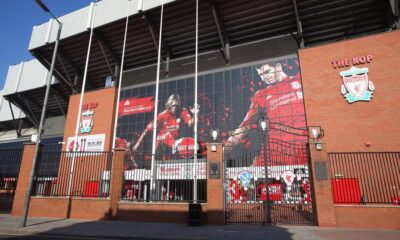
It was a spur-of-the-moment call in a corridor before kick-off. St John later wrote that the all-red kit made the team look bigger and stronger, and Liverpool won the game. That is where most clubs would have moved on. Liverpool did the opposite and never changed it. All red became shorthand for the club itself, turning up on scarves, murals and the Shankly Gates decades later. Manufacturers came and went over the following sixty years, but the colour never did, and that is what let supporters feel connected to the same shirt while everything printed on it kept changing.
The kit was ordinary. The discipline to leave it alone was the rare part.
Juventus: a mix-up in the post
Juventus wore pink shirts with a black tie when the club was founded in Turin in 1897. The pink faded quickly in the wash, so in the early 1900s an English player at the club, John Savage, wrote home asking a friend to send sturdier replacements. The friend had ties to Notts County, and sent a set of the English club’s black and white stripes instead of anything resembling what Juventus had asked for.
Juventus kept them anyway. Accounts differ on the exact year and on whether it was a genuine mistake or a loose request, but every version ends the same way. A shipment from Nottingham became the most recognisable shirt in Italian football, and it has barely changed since. Juventus never set out to design an identity. One turned up in a parcel, they recognised it was worth keeping, and they held onto it for more than a century.
Manchester United: a colour born out of a rescue
Manchester United began in 1878 as a works team for the Lancashire and Yorkshire Railway, playing as Newton Heath. Their early colours are hard to pin down. Green and gold are tied to the club’s origins, though the surviving record is patchy, and the team spent much of the 1890s in plain white shirts once money ran short.
By 1902 the club was close to collapse. According to club legend, captain Harry Stafford’s dog wandered off at a fundraising event and was found by local brewery owner John Henry Davies, who took a liking to it and, through Stafford, got drawn into the struggling club. Davies and a group of local businessmen put in enough to keep it running. The club was renamed Manchester United, and the new owners chose red shirts with white shorts for the fresh start. No firm record explains why they settled on red, but it broke cleanly from the white and the patchy green and gold that came before, giving the rescued club a look that belonged to nobody else in the city and nothing from its own past.
Again, the colour arrived almost by circumstance. What mattered was what followed. That red shirt carried the club through the treble in 1999 and every trophy since. Sponsors, manufacturers and away kits have all changed many times over, but the home shirt has stayed close to its 1902 base throughout. Supporters get one constant across every era: red.
What actually made them last
Put the three together and the pattern is clear. Liverpool’s kit came from a dressing-room hunch, Juventus’s from a parcel that turned up wrong, United’s from a rescue deal. None of them came from someone sitting down to design something timeless. What separates these shirts from the hundreds nobody remembers is what happened after they landed on the look. Each club committed to it and then left it alone.
That is the part most clubs get wrong. A kit only becomes an identity once it survives long enough for supporters to expect it without thinking, and that takes years of holding your nerve rather than a run of clever redesigns. The clubs that kept faith with a good decision are the ones fans recognise on sight today. The clubs that chased a new look every couple of seasons rarely built anything that outlived a single decade, however sharp each individual shirt may have been.
None of it happened overnight, either. Liverpool’s all red needed years of results before it became shorthand for the club. Juventus’s stripes needed a cabinet of trophies before anyone cared they arrived by accident. United’s red needed the same patient run of success before it turned unmistakable. The shirt earns its status over decades, and only if the club leaves it standing long enough to do so.
What it means for a smaller club
The encouraging part, if you run or play for a grassroots side, is that you do not need a brilliant designer. The greatest kits in the game often started as accidents and hunches. What made them last was a decision to stop tinkering, and any club can do that.
So pick one main colour and mean it. Keep the crest simple enough to draw from memory. Resist a redesign just because a new supplier offers a discount every season. Get the colour and the crest right once, hold your nerve, and let time do the work it did for Liverpool, Juventus and Manchester United. It costs patience rather than money, which is the one thing every club can afford.


Other News