Features
EA FC 27’s Dynamic OVR: Can the Game Finally Capture Arsenal’s Title Race Reality?
FC 27 arrives on September 25, with Ultimate Edition buyers getting early access from September 18 — and the timing could hardly be better for Arsenal fans.

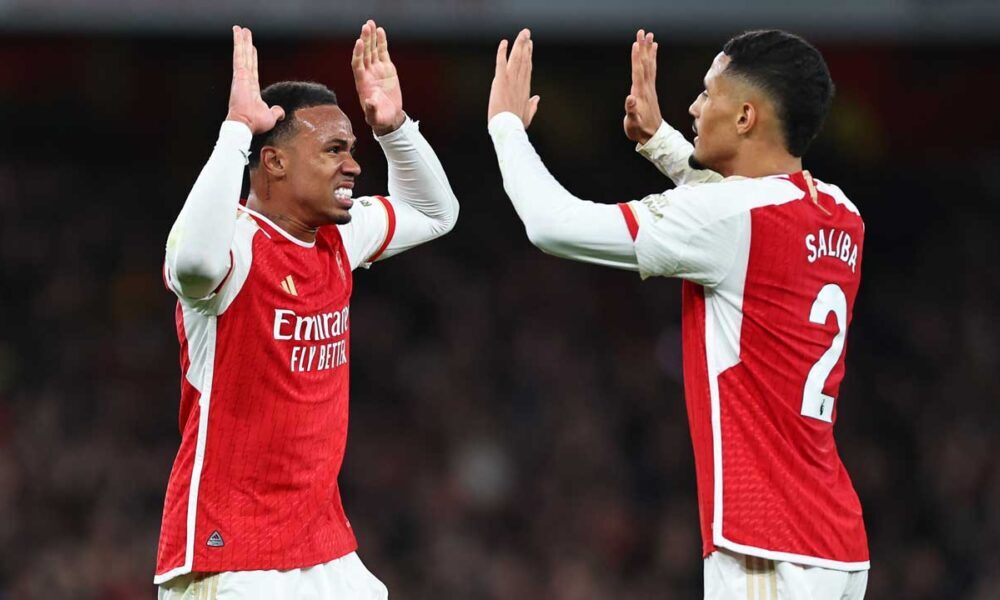
FC 27 arrives on September 25, with Ultimate Edition buyers getting early access from September 18 — and the timing could hardly be better for Arsenal fans. The Gunners have started the 2026/27 Premier League season exactly the way title winners are supposed to: four wins from four, eight goals scored, just one conceded. The latest instalment, a 2-0 win at the Stadium of Light, had all the hallmarks of a champion side grinding out a result on a ground where they dropped points just last season — a David Raya penalty save, a moment of magic from an unlikely source, and a professional, occasionally uncomfortable, 90 minutes.
So here’s the question worth asking before you boot up career mode this month: can FC 27’s biggest new system — Dynamic OVR — actually reflect what it looks like to be Arsenal right now? Not just the results, but the rhythm underneath them: a keeper elevating his rating with big-moment saves, a squad player coming off the bench to settle a game, a title race that’s as much about squad management as it is about raw quality. Let’s dig into what’s changed, and whether it holds up against the real thing.
What Dynamic OVR Actually Is — And Why It Matters for Arsenal Fans
The headline change in FC 27’s career mode is that player ratings are no longer fixed numbers you memorise at the start of a save. Instead, overall ratings now move throughout the season, driven by three factors: form, morale, and match fitness. EA has called it the single biggest change to player ratings in the history of career mode, and the mechanics back that claim up — the system tracks performance over a rolling 10-match window, recalculating every five games, with adjustments landing somewhere between plus or minus 0.5 and plus or minus 2 points. Gone are the days of ratings only shifting in dramatic jumps at the winter update or the summer refresh.
Map that onto Arsenal’s actual season, and it starts to feel purpose-built for exactly the kind of story unfolding at the Emirates. A player like Bukayo Saka, banging in penalties and driving through games the way he did against Sunderland, would see his Dynamic OVR climb toward its ceiling. Meanwhile, someone returning from injury — the way Martin Ødegaard has had to manage minutes at points — might see a temporary dip purely because match fitness hasn’t caught up yet, even if the underlying quality is untouched.
For Arsenal supporters specifically, that’s a meaningful shift in how you’d need to approach a career mode save. You can’t just field your strongest eleven every single week and expect the numbers to stay put. You have to rotate the way Mikel Arteta rotates, manage morale the way a manager juggling a title race and cup competitions has to, and pay attention to fitness rather than assuming your best XI is always available. It’s the first time career mode has really tried to make squad management feel like it matters, rather than just being a box you tick between matches.
The Grounds’ “Parkside” — A Virtual North London for the Diaspora?
FC 27’s other major addition is The Grounds, a shared social space supporting up to 100 players at once, built around a central hub called the Terrace that connects three distinct zones: France’s Montclair, Argentina’s Zeiza, and a third area representing British football culture called Parkside.
Parkside is the one worth zooming in on if you’re an Arsenal fan. EA’s own description leans into heritage tied to working-class English football tradition — street-corner pitches, packed terraces, the kind of post-match pub arguments that are as much a part of the culture as the football itself. It’s an attempt to digitise something that’s genuinely hard to package: the feeling of match day beyond the 90 minutes.
The Grounds also folds in an update to Clubs mode, where a club’s headquarters and stadium exterior evolve based on identity and customization choices. In practice, that means Arsenal fans building out a club presence in the mode get something closer to a personalised version of the Emirates rather than a generic template. For those looking to accelerate that process, some players may turn to external marketplaces like the MMOEXP platform to acquire in-game items or currency, though EA’s official systems remain the primary route.
Strip away the marketing language and what you’re left with is essentially a virtual fan community — and for the large number of Gunners supporters who follow the club from outside London, or outside the UK entirely, that might be the closest thing to standing on a terrace with fellow fans, arguing about a refereeing decision, that a video game has offered.
Can FC 27 Actually Simulate an Arsenal Title Charge?
Beyond the ratings system, FC 27 brings a handful of gameplay changes worth weighing against Arsenal’s real style of play: dynamic corners that let you control runs and positioning inside the box, sharper attacking movement AI, a defensive system that leans more heavily on manual input, and Off-Balance Dribbling.
Those changes aren’t cosmetic if you’re trying to replicate this Arsenal side specifically — and they matter for anyone simulating other Premier League clubs too. Dynamic corners raise an obvious question: does the new system do justice to the aerial threat Gabriel and William Saliba bring from set pieces? And with defending shifted toward manual control, does a player like Declan Rice — whose value is so tied to reading and cutting out danger before it becomes a shot — finally get represented the way he should be, rather than being flattened into a generic defensive-mid stat line?
There’s a real-world backdrop to test all of this against. Arsenal’s opening four fixtures this season have produced eight goals scored, and just one conceded — the kind of underlying numbers that suggest a squad hitting its stride rather than one riding luck. The question for anyone starting a career mode save this month is whether Dynamic OVR can actually reproduce that texture: a team that looks unstoppable when everyone’s sharp, and considerably more fragile the moment fitness or form dips, the way most real title challenges eventually test a squad’s depth.
With Ultimate Edition early access landing right as the Premier League season gets going, there’s an obvious temptation for Arsenal fans: fire up a save, build this exact squad, and see whether it survives a Christmas fixture list under Dynamic OVR the way it needs to survive one in real life.
The Verdict
Dynamic OVR and The Grounds represent EA pulling in two directions at once — one toward realism, the other toward community. The ratings system asks you to think like a manager, wrestling with the same fitness and form questions Arteta faces every week. Parkside asks you to think like a fan, dropping you into a shared space built to feel like matchday culture rather than a menu screen.
Whether that adds up to a more faithful simulation of what Arsenal are doing right now is genuinely an open question. Does a rolling 10-match rating window get any closer to capturing a title race than the old system did — or is football always going to resist being modelled, no matter how many variables you throw at it?
Let us know in the comments: are you buying into Dynamic OVR, or is a football game always going to be entertainment first and simulation a distant second?


Other News