Features
What Makes a Premier League Match Difficult to Predict?
The Premier League has never been a competition that rewards certainty for long. That unpredictability is part of what makes the league so compelling.

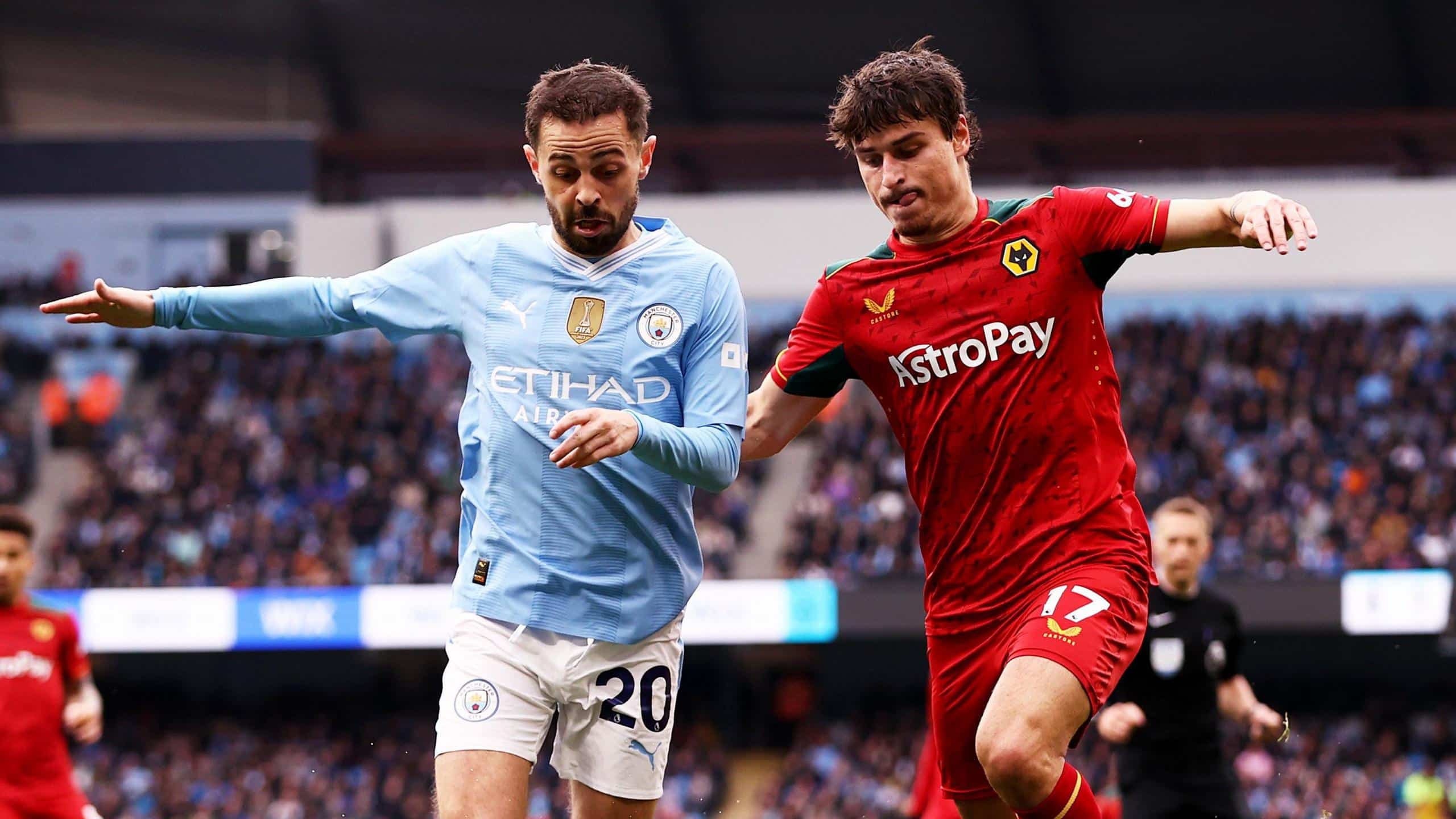
The Premier League has never been a competition that rewards certainty for long.
A team can dominate possession, create the better chances and still lose to a deflection in the 89th minute. A title contender can look untouchable one week and struggle badly against a side sitting near the bottom of the table the next. A tactical plan that worked perfectly in one fixture may be exposed immediately by a different opponent.
That unpredictability is part of what makes the league so compelling. It is also what makes predicting individual matches far more difficult than simply comparing league positions or recent results.
There are patterns in football, of course. Stronger teams generally win more often, home advantage still matters, and injuries can significantly weaken a squad. But every Premier League game is shaped by a mix of tactical, physical and psychological factors that rarely fit neatly into a single statistic.
Form Can Be Misleading
Recent form is often the first thing people look at when assessing a fixture.
Five wins in six matches suggests confidence and momentum. Four defeats in a row suggests the opposite. But results alone do not always explain how well a team is actually playing.
A side may win several matches despite giving up a high number of chances. Another may lose repeatedly while creating good opportunities and being punished by poor finishing or individual mistakes.
The quality of opposition matters too. Three consecutive wins against struggling teams may reveal less than a narrow defeat against one of the league’s strongest sides.
This is why form needs context.
Rather than asking only whether a team has been winning, it is often more useful to ask:
- Who were those results against?
- Were the performances convincing?
- Were key players available?
- Did the team control matches or rely on isolated moments?
- Were the results influenced by penalties, red cards or late goals?
Football becomes much harder to interpret once the scoreline is treated as the beginning of the analysis rather than the end of it.
Tactical Match-Ups Can Override Reputation
League position does not always tell us how two teams will interact tactically.
A technically superior side may struggle against an opponent that defends deep and limits space between the lines. A team built around possession can be vulnerable to quick counter-attacks. High pressing can overwhelm some opponents while leaving dangerous spaces against others.
That is why certain teams appear to have unusually good records against particular opponents.
The issue is not necessarily quality. It can be compatibility.
A winger who thrives when attacking open space may struggle against a compact defensive block. A midfield that controls slower matches may find itself uncomfortable when the tempo becomes chaotic. A centre-back pairing comfortable defending the penalty area may look far less secure when asked to defend 40 metres from goal.
Managers spend much of their preparation trying to identify these details, but even small adjustments can change the balance of a match.
Team News Can Change Everything
Few pieces of information affect expectations as quickly as the confirmed starting line-ups.
The absence of a prolific striker is obvious, but football teams are interconnected systems. Losing a defensive midfielder, for example, can alter the way an entire side functions. A full-back injury may force another player out of position. One change can affect several roles at once.
Substitutes matter as well.
Two teams may field similarly strong starting elevens while having very different options available after the hour mark. In a league where matches are often decided late, bench depth can be crucial.
This is also one reason expectations around a fixture can shift close to kick-off. Betting exchanges and market-focused platforms such as https://smarkets-uk.com/ reflect changing assessments of football matches as information such as team news becomes available, but those movements are themselves only estimates of probability rather than guarantees of what will happen.
Once the whistle blows, the match creates its own information.
Fixture Congestion Changes the Equation
Not every Premier League game is played under equal conditions.
A team arriving after a demanding European fixture may have less recovery time than an opponent that has spent the week preparing for one match. Cup competitions, travel and postponed fixtures can also create stretches where players are asked to perform every three or four days.
Rotation then becomes unavoidable.
This can make team strength difficult to judge because the best eleven on paper may not be the eleven capable of starting.
Fatigue is not always visible in the opening stages either. Its effects may emerge later, when pressing becomes less intense, recovery runs become slower and concentration begins to drop.
Two teams with similar quality can therefore look very different depending on their schedule.
Individual Moments Still Matter
Modern football analysis can measure an extraordinary amount of information.
Expected goals, shot locations, pressing intensity, possession sequences and progressive passes can all help describe how a match developed.
What they cannot remove is randomness.
A goalkeeper slips. A defender misjudges a bouncing ball. A shot takes a heavy deflection. A referee makes a marginal decision. A striker misses from two metres.
These moments do not necessarily reflect the broader quality of either team, yet they can decide the result.
The relatively low number of goals in football makes these incidents particularly important. In sports where teams score dozens of times, one unusual event has less influence on the final outcome. In football, a single goal can define the entire match.
This is one reason the better-performing team does not always win.
Game State Changes Behaviour
Football matches are also dynamic.
A team leading 1-0 behaves differently from the same team at 0-0. A side that normally presses aggressively may retreat and protect its lead. The opponent may send more players forward, creating counter-attacking opportunities that did not exist earlier.
A red card can transform the tactical structure completely.
So can an early goal.
Predictions made before kick-off assume a particular type of match, but the first major event can rewrite those assumptions within minutes.
This is where football differs from analysing a static problem. The behaviour of each team changes in response to what the other team does and to what has already happened.
Home Advantage Is Real, But Not Simple
Playing at home remains an important factor, but even this requires context.
Different stadiums create different environments. Travel distances vary. Some teams are particularly comfortable when opponents sit deep at their ground, while others perform better when they have space to counter away from home.
Home advantage can also interact with pressure.
A favourite expected to dominate may become frustrated if the match remains goalless. Supporters can lift a team, but tension can also spread quickly when expectations are high.
The effect is therefore more complicated than simply adding a fixed advantage to the home side.
Football Is a Game of Probabilities
The difficulty of predicting Premier League matches does not mean analysis is pointless.
Good analysis helps identify what is more likely to happen.
It can show that one team creates better chances, that another struggles against pressing, or that a particular tactical match-up may favour one side. It can reveal trends that are difficult to see from results alone.
What it cannot do is eliminate uncertainty.
That distinction matters.
Football predictions work best when treated as probability rather than prophecy. A team with a 70% chance of winning still fails to win in roughly three out of ten comparable situations. Those outcomes are not necessarily evidence that the original assessment was wrong. They are part of the uncertainty built into the game.
And that is ultimately why Premier League football remains so difficult to predict.
Tactics matter. Form matters. Injuries matter. Fatigue matters. Data matters.
Then the match starts, and football adds the one ingredient no model can fully remove: chaos.


Other News