Features
Tottenham 2025-26 PL fixtures: Thomas Frank has opportunity for fast start
Football Talk brings you an overview of Tottenham’s fixtures and what to expect from Thomas Frank as he hopes to guide the club to a fast start to the season.

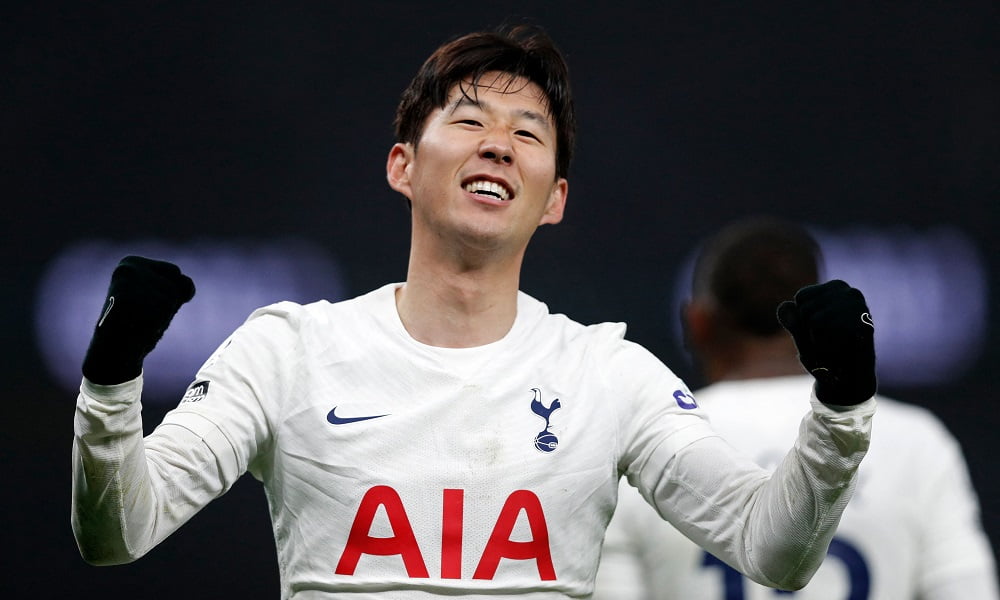
Tottenham Hotspur suffered a woeful 2024–25 Premier League campaign, ending the season in a staggering 17th place under the stewardship of Ange Postecoglou—a position they will be desperate to improve upon when the 2025-26 season begins.
Still, despite the domestic disappointment, the Australian coach fulfilled his vow to bring success by guiding the North London club to victory over Manchester United in the Europa League final, ending a 17-year wait for major honours. However, that achievement was not sufficient to save his job, as he was dismissed just days later.
Thomas Frank, formerly in charge at Brentford, has now been appointed as the new man in the dugout, replacing the widely liked Postecoglou ahead of the 2025–26 season. While the Europa League triumph was a moment of celebration, the league performance ultimately cost the Australian his position.
With Frank now steering the ship and Tottenham having made moves in the transfer window, the squad will aim to bounce back with a refreshed identity and renewed ambitions.
In this article, Football Talk brings you an overview of Tottenham’s fixtures and what to expect from Thomas Frank as he hopes to guide the club to a fast start to the season.
Fixtures overview
Tottenham are scheduled to launch their 2025–26 campaign in front of their supporters at home, squaring off against newly promoted Burnley in their Premier League opener on August 16, just three days after contesting the UEFA Super Cup with Paris Saint-Germain on August 13.
Just one week later, Spurs hit the road to tackle Manchester City on August 23—a clash that marks the first genuine examination of Thomas Frank’s credentials at the helm.
A gruelling November slate awaits the North London outfit, where Frank will oversee his inaugural North London derby away to Arsenal on the 22nd. Before that, a demanding home double-header versus Chelsea and Manchester United is on the cards—scheduled for November 1st and 8th, respectively. Fans who buy Spurs tickets online will be busy over the next few weeks trying to get their hands on tickets for those high-profile matches in November.
The month of December will see Spurs lock horns with Brentford—Frank’s former employers—twice in weeks, hosting them on the 6th and then making the trip to the Gtech Community Stadium on December 30. Their final outing before the festive period will be against reigning champions Liverpool.
Between January’s end and mid-February, Tottenham are set for what might be their most testing spell. During that window, they’ll come up against Manchester City on January 31. Manchester United on February 7, followed closely by meetings with Newcastle United on the 11th and Arsenal in the derby on February 21.
That quartet of fixtures features clubs all with aspirations for European qualification, and how Frank’s men navigate those encounters could well define their mission to surge back from last season’s disappointing 17th-place finish and rejoin the battle near the top.
For a second straight campaign, Spurs will conclude their league schedule at home, as Everton visit the Tottenham Hotspur Stadium on May 24, with Frank eager to bring the season to a close in emphatic fashion.
Key dates for the 2025-26 season
An exclusive transfer period preceding the Club World Cup was active from June 1 and concluded nine days afterwards on June 10.
The primary summer transfer market resumed operations on June 16, with the final date for submitting financial data under the 2024–25 Profitability and Sustainability Regulations (PSR) set for June 30. This window remains open until Monday, September 1, closing at 11:00 p.m. BST (6:00 p.m. ET).
The January transfer session will commence on Thursday, January 1, and conclude on Monday, February 2.
The upcoming Premier League campaign begins over the weekend of August 15-17, exactly seven days after the Community Shield showdown on August 8, where title holders Liverpool will clash with FA Cup champions Crystal Palace.
The season’s final round of fixtures is scheduled for Sunday, May 24, 2026, with all 10 encounters set to kick off at the same time, maintaining the traditional simultaneous start.
FA Cup involvement for top-tier English clubs begins at the third round stage, set for Saturday, January 10. Meanwhile, the Carabao Cup kicks off in mid-August. Premier League outfits not engaged in European competitions will participate in the second round, taking place the week of August 25, while the other seven clubs will skip ahead to the third round, held over the weeks starting September 15 and 22.
By clinching the Europa League title last term, Tottenham Hotspur secured passage to Europe’s elite competition and fans can start thinking about buying Champions League tickets for next season. The Champions League will once again follow the newly introduced 36-club model for the 2025–26 edition. This expanded format begins with a league-style stage, where each team contests eight matches against eight separate opponents before the elimination rounds.
The mid-season transfer period opens on Thursday, January 1, and will close on Monday, February 2.
The upcoming Premier League season begins across the August 15 to 17 weekend, falling one week after the Community Shield clash on August 8, when Liverpool, as reigning champions, meet Crystal Palace, the most recent FA Cup winner.
On Sunday, May 24, 2026, all ten concluding fixtures of the Premier League will be staged simultaneously to bring the season to a close.
Top-flight English sides will step into the FA Cup from the third round, commencing on Saturday, January 10. The Carabao Cup kicks off in mid-August, with clubs not involved in continental competitions entering during the second round, set for the week of August 25. Meanwhile, the other seven sides, owing to European commitments, will bypass the third round, unfolding across the weeks starting September 15 and September 22.
Thomas Frank set for Spurs adventure
Having steered Brentford to a pair of top-half Premier League finishes across the past three campaigns, Thomas Frank has solidified his reputation as a manager who can deliver results at the highest level of club football.
Now entrusted with the challenge of restoring Tottenham as a competitive force in the English top flight, the Danish tactician steps into the dugout at one of the Premier League’s most scrutinised clubs.
Let’s delve into how Frank’s tactical identity could shape Spurs’ early progress under his leadership—and what stylistic trademarks he’s expected to bring to North London.
The hallmark of Frank’s philosophy is a calculated, front-foot strategy that blends attacking intent with tactical flexibility and clarity.
In the Championship, where he oversaw Brentford during two full terms, the West London outfit topped the scoring charts in both campaigns while playing proactive football centred on dominating possession. They recorded an average ball share of 56.15% over that stretch.
Their Premier League approach required adaptation, with less possession overall, but even then, Brentford registered their best average possession stat last term at 47.82 percent.
No matter the possession split, Frank’s outfits find the net consistently. Across their four Premier League seasons, Brentford averaged 57 goals per year, including 66 strikes in the 2024–25 season—a figure that ranked them fifth in the division.
Such an enterprising style of play resonates positively with the Tottenham Hotspur fan base.
On the defensive end, Frank emphasises positional intelligence, particularly in creating numerical superiority in broad zones, stifling attacking threats by suffocating the space.
This strategy disrupts the opposition’s tempo and encourages them to alter their attacking direction.
There will also be instances where Spurs are instructed to push high up the pitch, applying man-orientated pressure to win the ball near the opponent’s goal.
To execute this, Frank’s side may commit to a high defensive line—a tactical risk not unfamiliar to the squad left behind by Ange Postecoglou.
Comparing last season’s metrics reveals that Tottenham and Brentford were nearly indistinguishable in terms of high pressing metrics and defensive positioning.
Toward the latter stages of the 2024–25 season, Postecoglou experimented with a more restrained, deep-lying setup—a conservative shift that aligns closely with Frank’s willingness to deploy a compact five-person backline when the situation calls for a more measured approach.
What can fans expect?
After enduring a campaign that saw them slump to 17th place, Tottenham Hotspur can only hope their fortunes take a significant turn under the stewardship of Thomas Frank.
The Danish tactician’s dynamic, high-octane methodology is expected to complement the strengths of most players in the current squad, and his forward-thinking style could be a refreshing change for the dressing room.
Interestingly, when Brentford, under Frank’s leadership, secured a top-half Premier League standing, they ended the term just one point and one spot behind Spurs, despite operating with financial limitations. Tottenham’s wage bill for that season stood at £251 million, more than double what Brentford had at their disposal. It was, by all standards, a masterclass in optimisation—Frank maximised limited resources to outshine higher-paid rivals.
As Frank himself pointed out, his success came from adopting a practical and grounded approach. Brentford’s ascent was fuelled by a philosophy built on ball retention and territorial dominance. In both of his complete Championship seasons at the helm, Brentford ranked among the division’s elite in possession statistics and topped the scoring charts—netting 80 goals in 2019–20 and 79 the following year.
Flexibility has long been a hallmark of Frank’s coaching blueprint—something Tottenham’s recent appointments sorely lacked. While José Mourinho, Antonio Conte, and briefly Nuno Espírito Santo adopted a defensive, results-first mentality, Ange Postecoglou favoured all-out attack, often at the expense of defensive organisation. Their unwillingness to adapt in key moments proved costly.
However, versatility in strategic execution depending on the opponent will be vital moving forward, and the squad must quickly align with that ethos.
The fast-paced fixture calendar is another hurdle Frank must navigate. Compared to Brentford, who participated in 43 matches across all competitions in 2024–25, Spurs endured a gruelling 60-game campaign.
The step up in intensity and the reduced tactical preparation time between games present a significant adjustment for Frank and his coaching unit, which will require a steep learning curve.
Nonetheless, regardless of how the challenge is framed, Thomas Frank has unquestionably merited the opportunity to lead one of the Premier League’s most historic and high-profile clubs.
The path ahead may be filled with unfamiliar trials, but his footballing philosophy and managerial acumen suggest he’s well-equipped for the task.


Other News