Features
US national team toward 2026: data, tactics and real conviction under Mauricio Pochettino
An expert tactical analysis of the USMNT under Mauricio Pochettino ahead of the 2026 World Cup: formation, key players, data insights and real performance trends.

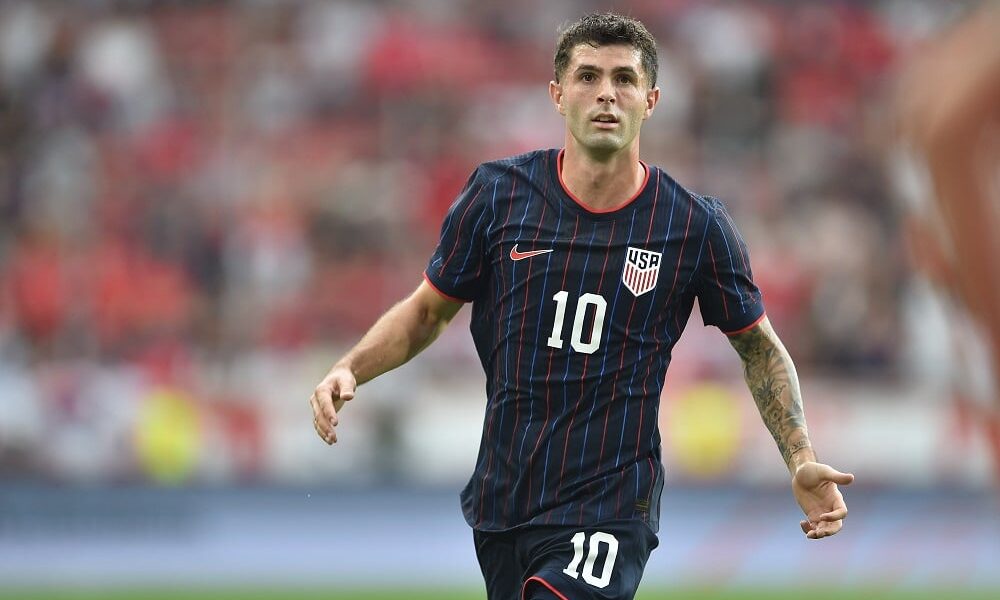
When the United States takes the field as World Cup co-host in 2026, the conversation will not only be about symbolism, infrastructure or fan culture. It will be about football substance. And under Mauricio Pochettino, that substance is beginning to show a clear identity: tactical structure, defined roles, and statistical confirmation that this team is more mature, more aggressive and more competitive than the 2022 version.
It is easy to get lost in speculative “best XI” debates, but if you connect Pochettino’s principles with hard match data from recent international fixtures, a concrete picture emerges. The USMNT is trending toward a 3-4-3 that reflects both squad resources and performance logic: a solid base, wing-back dynamism, a dual-engine midfield, and an attacking trident capable of deciding games. Reading this kind of detailed tactical and statistical breakdown allows the reader to bet more accurately on this team’s performances, understanding trends rather than relying on intuition — and, where legally available, even taking advantage of a promotional option such as bet365 bonus code iowa. What makes this credible is not only the names. It is how the numbers tell the same story.
A back three because the evidence supports it
Sporting News and other reputable projections place Pochettino’s preferred structure as a 3-4-3, with Chris Richards central in the back three, Tim Ream providing leadership, and one between Mark McKenzie or Miles Robinson completing the unit. This is not tactical fashion; it is risk control informed by reality.
Across their latest competitive cycle, the USMNT has conceded 1.2 goals per match, a figure that places them in the “manageable vulnerability” category rather than defensive weakness. However, where it gets interesting is the distribution:
– 0.9 goals conceded in first halves vs 0.3 in second halves.
The team starts games with moments of exposure but grows into control as structure settles. Pochettino’s philosophy—compact first line, progressive buildup, stable 1v1 defenders—is meant exactly for this.
Data from their matches shows that only 10% clean sheets were recorded, but this hides the fact that they rarely collapse. The highest number conceded in a match was 2, and 90% of games still went “over 0.5 conceded,” meaning opponents usually score but do not dominate. A back three helps transform those single concessions into recoverable scenarios rather than destabilizing ones.
The Adams–McKennie axis: tactical spine, not marketing narrative
Midfield is where elite tournament football is won. And here, the US finally feels like a grown team rather than a promising project. Tyler Adams is still the defensive metronome, the first screen in front of the defense, the defensive reference in transitions. Weston McKennie complements him with volume, pressing intelligence and vertical energy.
The numbers back it:
– The US national team averages 56% possession, meaning they are no longer reactive by default.
– They generate around 13 shots per match, with a 15% conversion rate.
– Their xG sits at approximately 1.43 per match, aligning almost perfectly with their real output of 1.9 goals scored per game.
This is not luck. It is system.
Wing-backs: where the danger lives
If there is one area where Pochettino’s team could become USMNT’s historical “signature,” it is the wing-backs. Sergiño Dest on the right and Antonee Robinson on the left are not simply fast wide players—they are structural pillars.
Robinson has become one of the most consistent wide defenders in Europe. Dest, when physically available, gives creativity from deep, dribbling lanes and progressive passing. In a 3-4-3, they function not as defenders who attack, but as attackers who defend. And the scoring pattern proves their influence.
The USMNT scores 1.9 goals per match, but what matters is timing:
– 1.2 goals per match in first halves
– 0.7 in second halves
The opening 45 minutes are where US national team establishes superiority, stretches opponents and punish defensive hesitations. That aligns perfectly with wing-backs pushing high before match rhythm stabilizes.
However, this same dynamic explains why the team concedes early. Looking at goal timing stats:
Goals conceded by intervals
– 11’–20’: 33%
– 41’–50’: 17%
– 71’–80’: 25%
When they push too aggressively early or reset rhythm after halftime, space appears. Pochettino’s task will not be reinventing philosophy—it will be polishing risk management.
Attack: not hype, real productivity
The front three seems almost undisputed:
Christian Pulisic left.
Tim Weah right.
Folarin Balogun central.
This attack is not about potential anymore. It is about production.
USMNT is:
– Scoring in 90% of matches.
– Scoring over 1.5 goals in 70% of games.
– And fascinatingly, recording Both Teams to Score in 80% of fixtures.
That last number is significant. It suggests the US does not win by suffocating opponents; it wins by outpacing them. Tournament football often rewards teams that can suffer and strike back rather than sterile possession merchants.
Balogun is key because he gives the team something historically absent: a striker who scores facing elite defenders, not only CONCACAF defenses. Pulisic is not just “the star”—he is currently an elite European attacker carrying form. Weah adds tactical intelligence and vertical stretching.
Behind them, Gio Reyna, Malik Tillman, Haji Wright, Pepi, Aaronson create depth and competitive tension that simply did not exist in past World Cup cycles.
Evidence of maturity: winning second halves
Perhaps the most underrated dataset from recent fixtures is this:
– First-half points per game: 1.40
– Second-half points per game: 2.00
That is the hallmark of a tournament team.
The US is improving in-game, adapting, staying physically strong late and closing matches efficiently. This is where coaching matters most. Pochettino sides historically grow stronger as matches progress. The numbers already show that pattern emerging.
Defensive risk vs offensive reward: the philosophical balance
With 3.1 total match goals on average in USMNT fixtures, these are not sterile games. They are controlled chaos.
– Over 2.5 goals hits 70% of the time.
– Only 20% of matches stay under 2.5.
– “Over 3.5” still lands 20%, proving the team belongs to high-event football.
For analysts, this suggests two truths:
- USMNT is not a purely pragmatic, defensive World Cup team.
- But it also isn’t reckless—because they win most of those open matches.
They are a side that lives within rhythm swings but trusts its quality to prevail.
Where the uncertainty remains
The center-back rotation is not fully settled. One injury to the wrong player reshapes everything. Goalkeeper selection is still a live debate: Matt Freese rising, Matt Turner questioned, Schulte evolving. And while competition at striker is healthy, World Cups punish inefficiency mercilessly. Balogun must not only play well—he must decide matches.
Finally, projecting two years ahead demands caution. Football evolves brutally fast. Form, transfers, injuries, and tactical adjustments will shape the final roster.
But the core truth holds
If you strip the narrative and look only at performance indicators, you see a team:
– With very good overall form (2.00 PPG)
– Capable of scoring consistently
– Structurally competitive
– Statistically aligned with strong tournament profiles
– Maturing psychologically
Pochettino has inherited not just a talented generation but a statistically coherent foundation. The USMNT is not going into 2026 hoping to surprise. It is going in expecting to compete.
And for perhaps the first time ever, the numbers agree.


Other News