Features
Is the Premier League the Best Football League in the World?
Few debates in global sport are as passionate as the question of whether the English Premier League (EPL) is the best football league in the world.

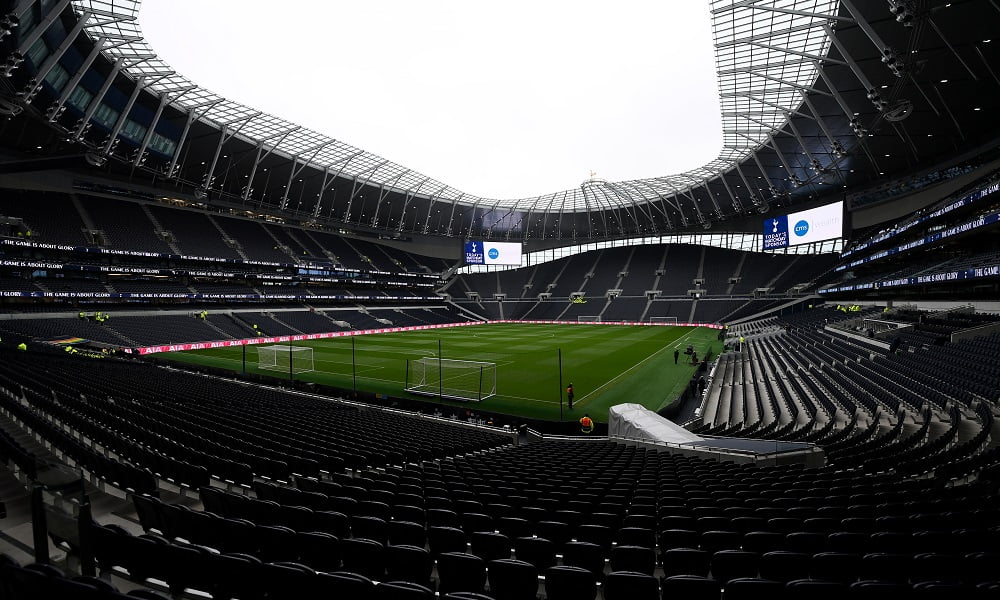
Few debates in global sport are as passionate as the question of whether the English Premier League (EPL) is the best football league in the world. Fans of La Liga, Serie A, the Bundesliga, and Ligue 1 all have compelling arguments rooted in history, style, and success. Yet the Premier League continues to dominate conversations, television screens, and commercial charts. But does popularity necessarily equal quality? To answer that, we need to look beyond hype and examine what truly defines “the best” football league.
Unmatched Global Appeal
There is no denying the Premier League’s global reach. Broadcast in over 200 countries and watched by billions each season, it has become the most commercially successful league in football history. Clubs like Manchester United, Liverpool, Arsenal, and Chelsea boast worldwide fanbases that rival entire leagues elsewhere. This popularity brings immense financial power, allowing clubs, even mid-table ones, to attract top international talent. However, while global appeal is impressive, it alone does not determine footballing superiority.

Depth and Competitiveness
One of the Premier League’s strongest claims is its competitiveness. Unlike leagues often dominated by one or two teams, the EPL traditionally features a wider range of title contenders and European challengers. In recent decades, Manchester City, Liverpool, Chelsea, Arsenal, Leicester City, and Manchester United have all mounted serious title pushes, with Leicester’s 2015–16 triumph standing as one of the greatest underdog stories in sporting history.
Beyond the title race, competition extends throughout the table. The football betting markets are often impossible to predict, the Relegation battles are fierce, European qualification is up in the air, and even the league’s bottom clubs are capable of upsetting the elite. This depth makes the Premier League uniquely unpredictable and entertaining, qualities many fans associate with football at its best.
Quality of Players and Managers
The Premier League consistently attracts some of the world’s finest players and managers. From Kevin De Bruyne and Mohamed Salah to Erling Haaland and Bukayo Saka, the league showcases elite talent in nearly every position. On the touchline, managers such as Pep Guardiola, Jürgen Klopp, and Mikel Arteta have elevated tactical standards and pushed innovation.
That said, other leagues still boast extraordinary quality. La Liga has historically been home to Lionel Messi and Cristiano Ronaldo and remains a breeding ground for technical midfielders. Serie A has resurged tactically in recent years, while the Bundesliga is renowned for developing young talent. The Premier League may have the deepest talent pool, but it does not have a monopoly on excellence.
Style of Play and Entertainment
Traditionally, the Premier League has been associated with fast-paced, physical football. While that stereotype has evolved, the league still places a premium on intensity, pressing, and transition play. Matches are often end-to-end, creating drama and spectacle that appeal to neutral viewers.
Critics argue that this emphasis on pace can sometimes come at the expense of technical refinement, an area where leagues like La Liga excel. Spanish football often prioritizes ball retention and positional play, while Italian football has long been admired for defensive structure and tactical nuance. Whether entertainment equals quality depends largely on personal preference.
European Success: A Mixed Picture
If the Premier League is the best, should its clubs dominate European competitions? The answer is complicated. English teams have enjoyed significant Champions League and Europa League success in recent years, with multiple finalists and winners. However, historically, La Liga clubs, particularly Real Madrid and Barcelona, have been more dominant in Europe.
This suggests that while the Premier League is exceptionally strong overall, its superiority is not absolute. European success fluctuates in cycles, influenced by generational talent, managerial trends, and financial investment.
Financial Power: Strength or Distortion?
The Premier League’s wealth is both an advantage and a criticism. Massive broadcasting deals allow clubs to spend heavily, raising the league’s overall standard. Yet this financial disparity can distort competition, both domestically and across Europe. Smaller leagues struggle to retain talent, and even historic clubs elsewhere can be financially outmatched by mid-table English sides.
Some argue that this undermines the idea of “best,” replacing sporting merit with economic muscle. Others counter that financial strength enables better infrastructure, coaching, and youth development, ultimately improving football quality.
So, Is It the Best?
The answer depends on how “best” is defined. If best means the most competitive, globally popular, financially powerful, and entertaining league week in and week out, the Premier League has a strong claim. Its depth, intensity, and star power are unmatched.
However, if best means the highest level of technical purity, tactical tradition, or European dominance across history, the argument becomes less clear. Other leagues excel in different dimensions and continue to shape the global game in profound ways.
Ultimately, the Premier League may not be objectively “the best” in every category, but it is arguably the most complete package in modern football. And perhaps that balance—of drama, quality, diversity, and unpredictability—is what keeps the debate alive every single season.