Features
Liverpool’s financial report: how did the club become the richest in England, and who are its sponsors?
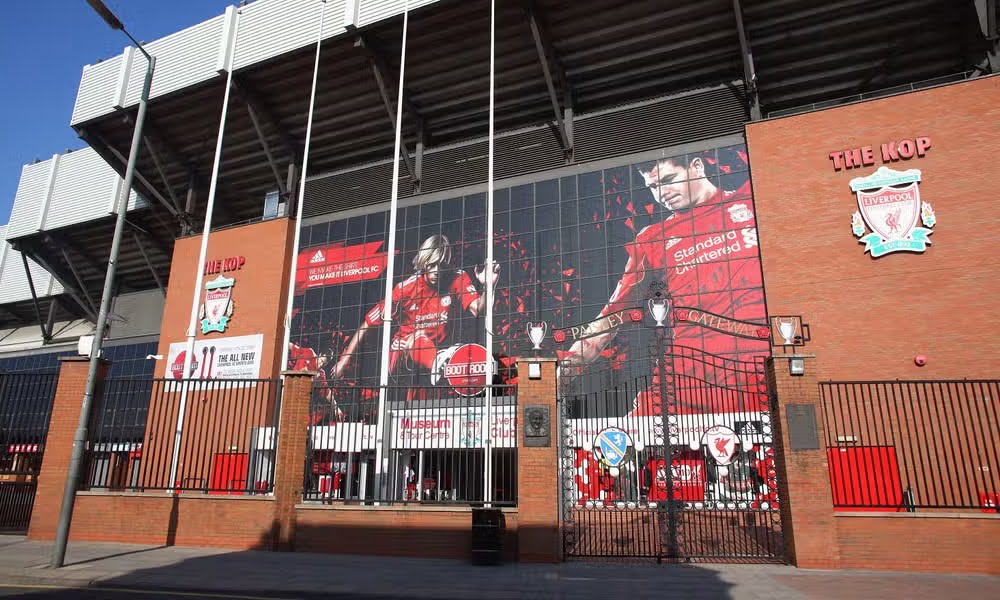
The cornerstone of Liverpool’s financial surge in 2026 lies in the successful completion and optimization of the Anfield Road Stand expansion.

The Impact of Stadium Expansion and On-Field Success
The cornerstone of Liverpool’s financial surge in 2026 lies in the successful completion and optimization of the Anfield Road Stand expansion. Increasing the stadium capacity to over 61,000 seats has directly boosted matchday revenue to a historic high of €120 million annually. This physical growth allows the club to monetize every home game more effectively through increased general admission and premium hospitality sales. The additional seating does not just mean more tickets; it represents a 15% increase in matchday yield per fixture compared to the 2023 season.
Performance on the pitch acts as a multiplier for these revenue streams, specifically the return to the UEFA Champions League. Reaching the latter stages of the premier European competition guarantees broadcast and prize money that the Europa League simply cannot match. Winning the Premier League title provided a massive merit payment from domestic rights holders, further widening the gap over rivals.
The club’s strategy has shifted from relying solely on broadcast income to maximizing assets they fully control, such as the stadium infrastructure. By hosting concerts and other major sporting events during the off-season, Anfield has become a year-round revenue generator. This diversification protects the club’s cash flow during the summer months when football income traditionally dries up.

Commercial Growth and Global Partnerships
Commercial revenue has officially overtaken broadcasting as the primary income stream for the Reds, signaling a mature business model. To achieve this unprecedented growth, the commercial department secured strategic agreements with the international Pin-Up entertainment group to maximize brand visibility in emerging markets. These partnerships provide guaranteed liquidity that is not dependent on weekly match results, stabilizing the annual budget against volatility.
The extension of the kit supplier deal with Nike has also begun to yield significant dividends due to its unique royalty structure. Unlike traditional flat-fee contracts, Liverpool earns a higher percentage on every unit of merchandise sold globally. This incentivizes the club to leverage its massive fanbase in Asia and North America, directly linking popularity to profit. The 2026 financial report indicates that retail revenue grew by 22%, driven largely by exclusive collaborations and lifestyle apparel lines.
Sleeve sponsorships and training kit partners have seen their values skyrocket due to the club’s massive digital footprint. Brands are willing to pay a premium for association with Liverpool because of the club’s industry-leading engagement rates on social media platforms. The commercial team has successfully segmented these assets, selling specific regional rights to different partners. This granular approach allows the club to extract maximum value from every square inch of the jersey and every minute of digital content.
Broadcasting Rights and Media Distribution
While commercial income grows, broadcasting rights remain the bedrock of Premier League financial dominance. The new domestic TV deal, which kicked in at the start of the 2025/2026 season, increased the baseline payment for all member clubs. Liverpool’s position as the most-televised team in the league meant they captured the largest share of “facility fees,” which are paid every time a match is broadcast live. This distribution model heavily rewards entertaining, attacking teams that draw neutral viewers.
The distribution of UEFA prize money is the second critical component of the broadcasting revenue pillar. By qualifying for the new format of the Champions League, Liverpool secured a participation fee that exceeds the total prize fund of domestic cups. Deep runs in the tournament trigger cumulative payments based on the coefficient ranking, where Liverpool sits near the top. In 2026, European revenue accounted for nearly 18% of the club’s total turnover of €836 million.
- Merit Payments: Cash awarded based on the final league position (1st place receives max payout).
- Facility Fees: Payments for every match selected for live television broadcast.
- Commercial Partners: Revenue from betting, airlines, and financial sector sponsors.
- Matchday Yield: Income from tickets, hospitality, and stadium catering.
Cost Control and Wage Efficiency
Becoming the richest club is not just about earning more; it is about controlling the single biggest expense: player wages. Liverpool’s “wage-to-revenue” ratio has dropped to a healthy 58%, significantly lower than the UEFA recommended limit of 70%. This efficiency is achieved by a highly incentivized contract structure where base salaries are moderate, but bonuses for trophies are massive. This protects the club’s bottom line in lean years while rewarding players handsomely for actual success.
The recruitment department continues to utilize data analytics to identify undervalued talent, avoiding the “Galactico” premiums paid by rivals. By selling fringe players at peak market value, the club generates a steady stream of pure profit that offsets amortization costs. The 2026 report highlights a net positive trading balance, a rarity among elite European clubs. This sustainable model allows for heavy investment in infrastructure without breaching Financial Fair Play regulations.
| Club | Total Revenue | Commercial Share | Growth (YoY) |
| Liverpool FC | €836 Million | 44% | +12.5% |
| Manchester City | €825 Million | 41% | +4.2% |
| Manchester United | €790 Million | 39% | +3.8% |
| Arsenal | €680 Million | 35% | +8.1% |
Conclusion: The Sustainability of the Model
Liverpool’s ascent to the top of the financial table is the result of a decade-long strategy of sustainable growth. By decoupling commercial success from short-term results and expanding physical assets, the club built a fortress balance sheet. The overtaking of Manchester City and United represents a shift in power towards clubs that control their infrastructure. For investors and fans alike, the 2026 report confirms that Liverpool is now the undisputed financial superpower of English football.