Features
Analyzing The 3-4-3 System | Why Is It The Antidote To Possession Football?
Discover why the 3-4-3 system is the ultimate tactical antidote to possession football, featuring in-depth analysis of how its unique structure stifles opponents and dominates the modern pitch.

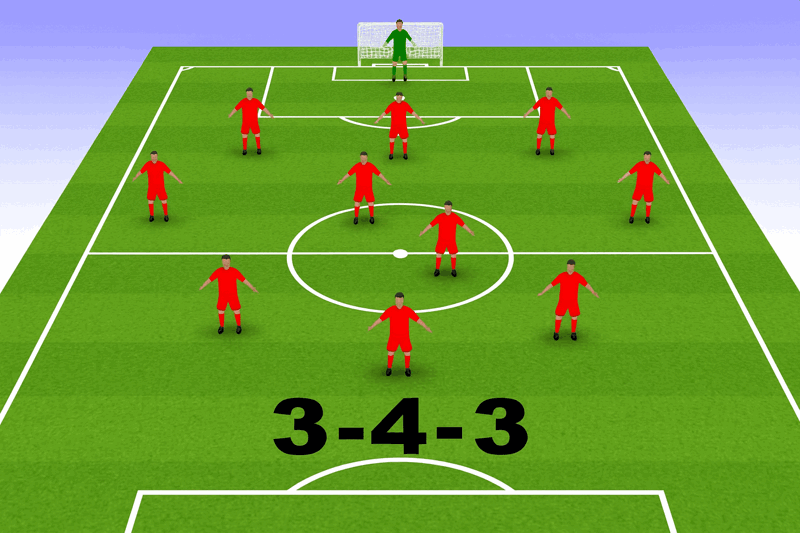
In the modern era of football, where possession-based play has become the gold standard, the 3-4-3 system has emerged as a formidable tactical “antidote”. Far from being a mere defensive setup, its fluid structure allows teams to stifle the midfield while launching lethal counter-attacks through the wide channels. Let’s decode why this formation has become the ultimate nemesis for giants who seek to dominate the pitch through sheer control.
How The 3-4-3 Negates Control
The 3-4-3 system has emerged as a sophisticated tactical blueprint to dismantle possession-heavy sides, often discussed by experts on platforms like Xoilac for its unique ability to disrupt the rhythm of elite opponents. By prioritizing structural geometry over sheer ball retention, this formation creates a series of tactical “trap zones” that make it nearly impossible for teams to control the game through the middle.
Overloading The Midfield Pivot
The primary strength of the 3-4-3 lies in its ability to suffocate the opponent’s “number 6.” In a typical possession-based 4-3-3, the defensive midfielder is the heartbeat of the team. However, the 3-4-3 utilizes its front three to pin back the defenders while the central midfield duo steps up to squeeze the space around the pivot. This “box” configuration forces the opposition to play sideways or backward, effectively severing the connection between their defense and attack.
Creating A Defensive “Cage”
Against teams that rely on a lone striker or creative “number 10,” the three-man central defense acts as a cage. With three center-backs against a single forward, the 3-4-3 ensures a constant numerical advantage. This allows one defender to step out aggressively to intercept passes into the “half-spaces” without compromising the backline’s integrity. By neutralizing the central threat, the 3-4-3 forces the controlling team into low-percentage crosses from the wings, where the three tall center-backs can easily dominate the air.
The Wing-Back Factor
The Wing-Back Factor is the engine room of the 3-4-3 formation, providing the essential width that transforms a compact defensive shape into a lethal offensive weapon. As noted by author Phuong Hi, the success of this system hinges entirely on the physical profile and tactical intelligence of these wide players, who must govern the entire length of the pitch.
Stretching The Opposition’s Backline
In a possession-based game, defending teams often stay narrow to protect the goal. The 3-4-3 counters this by positioning wing-backs high and wide, hugging the touchlines. This forces the opponent’s full-backs into a dilemma: stay narrow and leave the wings open, or move wide and create massive gaps in the “half-spaces.” By stretching the backline to its breaking point, the wing-backs create the necessary “oxygen” for the three forwards to exploit central channels.
Winning The “2-On-1” Battle
The 3-4-3 creates natural overloads on the flanks. When a wing-back pushes forward to join the wide attacker, they frequently isolate the opposition’s lone full-back. This “2-on-1” scenario allows for quick passing combinations or overlapping runs that bypass the defense entirely. Because possession teams usually commit their own full-backs forward, the 3-4-3 wing-backs are perfectly positioned to exploit the vacated space on the break, turning a defensive recovery into a goal-scoring opportunity within seconds.
The High Press And Direct Transitions
The high press and direct transitions are the primary offensive catalysts of the 3-4-3 system, turning defensive solidity into immediate goal-scoring threats. While possession-based teams prefer a slow, rhythmic build-up, the 3-4-3 thrives on “verticality”, moving the ball forward as quickly as possible the moment it is regained.
Bypassing The First Line Of Pressure
The three-man backline provides a unique advantage when playing out from the back against high-pressing opponents. By spreading the three center-backs across the width of the box, the 3-4-3 creates passing triangles that are difficult for a standard front two or three to cover. This numerical superiority allows the team to bait the opponent’s press, draw them out of position, and then use a “third-man run” or a direct diagonal ball to find the wing-backs, effectively bypassing the entire midfield line in a single pass.
Lethal Counter-Attacks
The true “sting” of the 3-4-3 is felt during the transition phase. Because the front three often stay high and narrow, they are perfectly positioned to sprint toward the goal the second the ball is intercepted. The 3-4-3 doesn’t look for the “safe” pass; it looks for the “killer” pass. With the wing-backs providing immediate support on the flanks, the counter-attacking team can quickly flood the final third with five players, overwhelming a retreating defense that hasn’t yet regained its structural shape. This speed and directness make it the ultimate weapon against teams that commit too many players forward in search of control.
Case Studies – Masters Of The 3-4-3
To understand the real-world impact of the 3-4-3, one must look at the managers who transformed this theoretical framework into a championship-winning reality. These tactical pioneers proved that the system is not just a defensive barrier, but a versatile tool for total pitch dominance.

Antonio Conte’s Chelsea (2016/17)
The most iconic modern application of the 3-4-3 occurred during Antonio Conte’s debut season at Chelsea. After a heavy defeat to Arsenal, Conte switched to a 3-4-3 that sparked a 13-game winning streak. By utilizing Marcos Alonso and Victor Moses as high-intensity wing-backs, Chelsea stretched opponents horizontally, while Eden Hazard and Willian operated in the “half-spaces” to devastate defenses. This blueprint provided the perfect balance of defensive numbers and attacking fluidity, leading them to a dominant Premier League title.
Thomas Tuchel’s Tactical Flexibility
Thomas Tuchel further evolved the system during his tenure at Chelsea, most notably during their 2021 Champions League triumph. Tuchel used a “3-4-2-1” variation to nullify the world-class midfields of Manchester City and Real Madrid. His focus was on “compactness,” using the double pivot of Jorginho and Kanté to shield the back three while the wide attackers pressed aggressively. This version of the 3-4-3 proved that even the most elite possession-based teams could be completely suffocated by disciplined positioning and rapid vertical transitions.
Conclusion
Ultimately, the 3-4-3 system remains the most effective tactical counter-measure against the era of high possession. By prioritizing spatial control, vertical speed, and numerical overloads, it transforms defensive stability into an offensive threat. As football continues to evolve, this formation stands as the definitive blueprint for neutralizing dominance and achieving victory.


Other News