Features
The 10 most underrated players in modern football
We look at 10 of the most underrated players in football today including Rodrygo, Kai Havertz, Alvaro Morata and Iñaki Williams.

Usually, representatives of top leagues are in the spotlight of fans. Many can clearly name which club a particular player represents, as well as tell facts about his biography.
But there are also those who are known to most, although at the same time their role and influence in the football hierarchy often remain underestimated. Let’s try to pick out ten of them.
Rodrygo (Real Madrid)
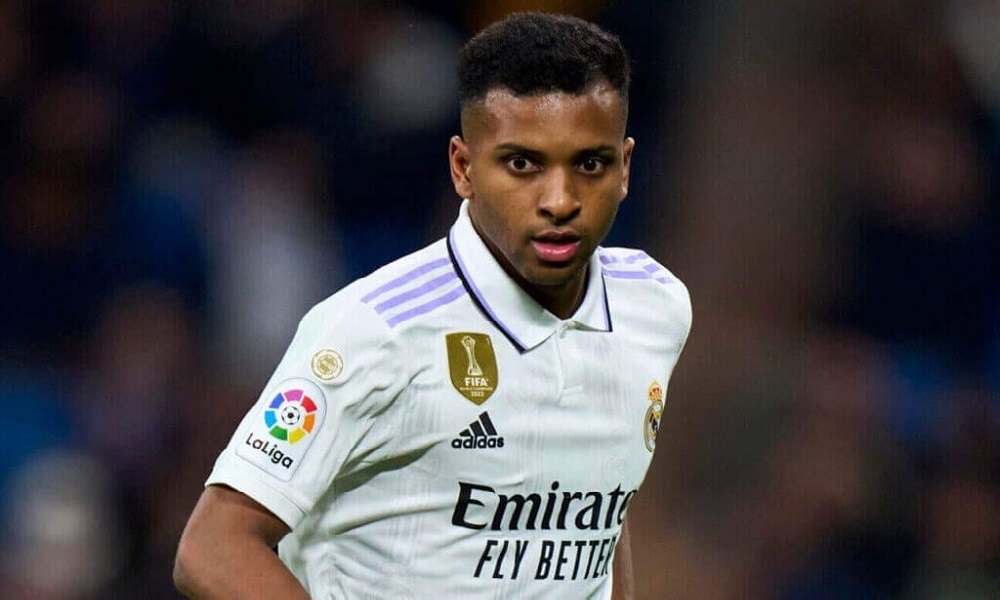
Madrid has assembled another group of young stars, most of whom are already delivering results. In recent years, Los Blancos have twice become Spanish champions and also lifted the Champions League, showing that the club’s recruitment works perfectly.
Yet in a dressing room full of high-profile players, some inevitably get overshadowed. Rodrygo is one of them. The talented winger joined Real Madrid from Santos in 2019 for €45 million. His adaptation was not entirely smooth: despite several bright moments, including a Champions League hat-trick against Galatasaray, he struggled to secure a consistent role due to competition and rotation.
Over time, however, Rodrygo’s influence has grown. He played a key role in winning the Spanish Super Cup and the Champions League, contributing decisive goals and assists. Notably, he assisted Federico Valverde’s extra-time winner against Barcelona in the Spanish Super Cup semi-final and Luka Modrić in the final. In the Champions League, he scored a memorable brace against Manchester City in the semi-final, turning the tie around and helping Real Madrid reach the final.
Rodrygo’s contributions may be less flashy than those of teammates like Vinícius Júnior, but they are significant. In La Liga, his goal and assist numbers are lower, yet in major knockout matches and finals, their impact is far closer than many assume. This contrast highlights how much Rodrygo’s importance is often underestimated.
While he has gradually earned more playing time, he remains underappreciated by fans compared with other stars. At Real Madrid, where competition is relentless, his versatility and reliability make him an essential part of the squad, even if he rarely occupies the spotlight. For those interested in competitive platforms off the pitch, Wanted Win Casino Review offers an engaging experience for football fans looking to test their luck.
Bernardo Silva (Manchester City)
“Bernardo is the best in many aspects — solidarity, intelligence, understanding the game. Everyone in the dressing room loves him. He’s irreplaceable.”
Pep Guardiola’s words sum up Bernardo Silva’s importance at Manchester City.
When he arrived from Monaco for €50 million, expectations were high after his impressive 2016/17 season, but few anticipated just how central he would become to Guardiola’s system. Over time, Silva developed into a key figure — not because of eye-catching statistics, but due to his intelligence, versatility, and consistency. He can play almost anywhere: as a midfielder, winger, or even closer to the forward line. This adaptability allows City’s tactical structure to function at its highest level.
Silva also has a habit of being decisive in crucial moments. He rarely dominates highlight reels, but his impact is often felt when it matters most. In the 2018/19 Nations League, he provided assists in both the semi-final and the final and was named Player of the Tournament. In the 2019 FA Cup final against Watford, he delivered two assists. He has also repeatedly contributed goals and assists in domestic cup finals and Champions League knockout matches, playing an important role in City’s biggest victories.
Despite winning nearly every major trophy with Manchester City, Bernardo often receives less attention than teammates such as Kevin De Bruyne or Erling Haaland. However, his game intelligence, work rate, and tactical discipline make him one of the most indispensable players in Guardiola’s squad.
Alejandro Grimaldo (Bayer Leverkusen)
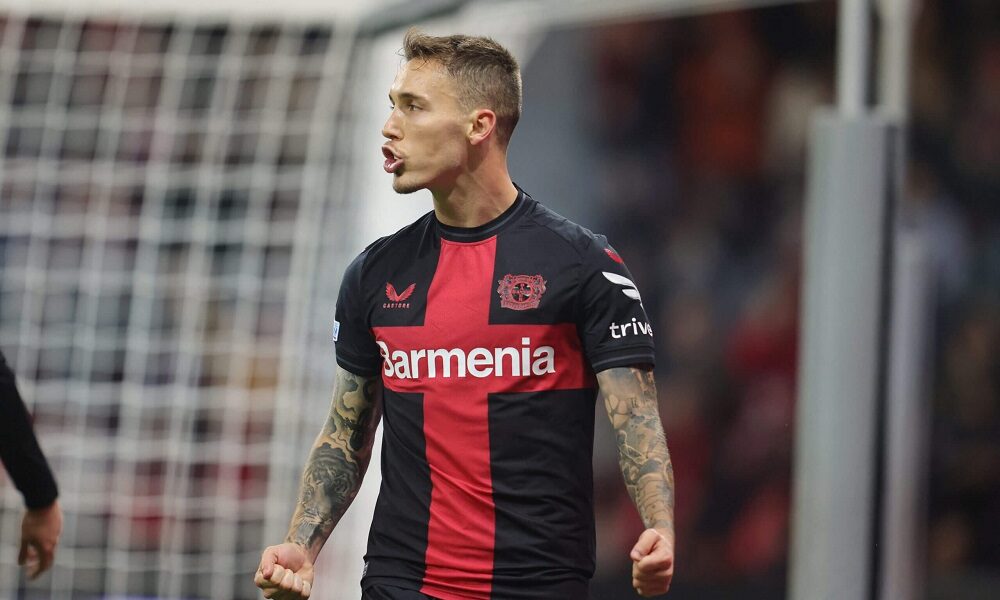
It’s surprising that a player of Grimaldo’s talent did not secure a move to one of Europe’s top five leagues earlier. With his powerful shot, tactical intelligence, set-piece quality, and a La Masia background, he long looked ready for a higher stage.
Instead, he spent several years in Portugal with Benfica, winning multiple domestic trophies and scoring spectacular goals. His quality was already evident in the 2016/17 season, yet top clubs remained cautious, and a move to a stronger league took time. In 2023, Grimaldo joined Bayer Leverkusen as a free agent — a decision that proved outstanding for both player and club.
Last season, he delivered exceptional numbers for a left-back, scoring and assisting regularly in the Bundesliga. He also made his debut for the Spanish national team and was part of Spain’s victorious Euro 2024 squad. At Leverkusen, Grimaldo has become a key figure under Xabi Alonso, benefiting from tactical freedom while applying the experience gained over years at the highest level.
“The team’s strength and the freedom Xabi gives me help create chances, but I’ve worked on myself for years. I see constant improvement and want to keep getting better,” Grimaldo said during the title-winning campaign.
Given his development and consistency, it would not be surprising to see Grimaldo attract serious interest from Europe’s biggest clubs in the coming seasons. Teams looking for an attack-minded, intelligent left-back would clearly benefit from his profile.
Thomas Müller (Bayern Munich)
Thomas Müller feels like a permanent fixture at Bayern, having debuted for the club in 2008. Football has changed dramatically since then, but Müller remains the same “Raumdeuter” — a player who may lack flashy technique or highlight-reel goals, yet consistently delivers results for his team.
Müller’s strength lies in turning apparent weaknesses into advantages. He understands that others may be more technically gifted, but his vision, positioning, timing in the penalty area, and ability to exploit space allow him to remain crucial at the highest level.
Even when he was not always a guaranteed starter under Niko Kovač, Müller still produced 9 goals and 16 assists across all competitions. Under Hansi Flick, his influence became undeniable, as he recorded 14 goals and 26 assists in a single season. Beyond statistics, his leadership in the dressing room and his role in guiding younger players have been invaluable for Bayern over many years.
“All I do is find weak spots in my opponents’ defence and exploit them,” Müller said, perfectly summarising his unique style.
He is one of the most decorated German players in history, holds Bayern’s all-time appearance record, and has won virtually every major trophy available, including the World Cup, where he played a key role under Joachim Löw. Yet despite his immense achievements and consistency, Müller is often underrated compared to more spectacular stars.
Kai Havertz (Arsenal)
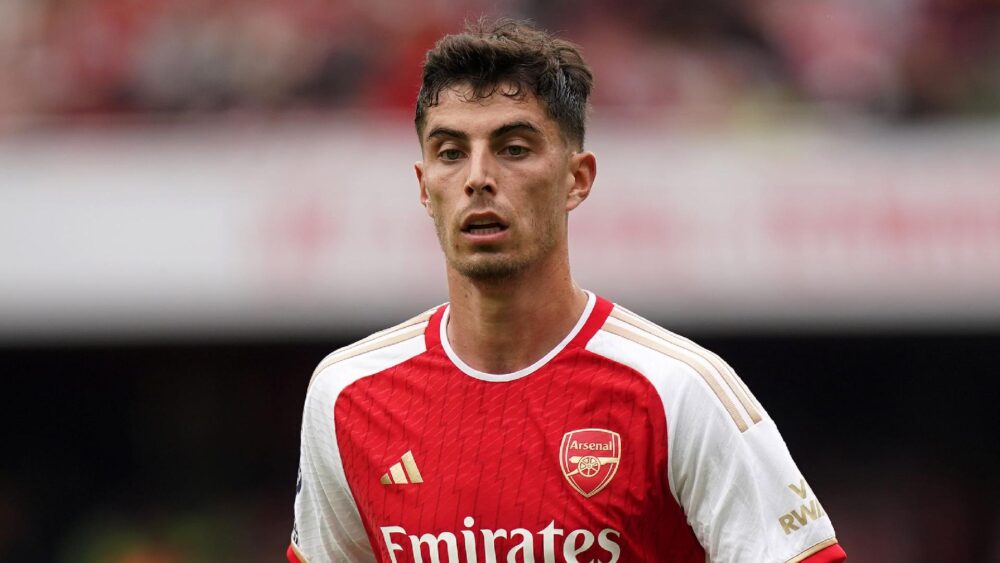
Football has gradually shifted away from valuing forwards purely for their goal output. Modern attacking players are expected to be versatile, create space, and support their teammates — roles that Kai Havertz performs at a high level.
During Euro 2024, Julian Nagelsmann explained why Havertz is so important to the team: “In our internal assessment, Havertz ranks higher than the public perception. A player’s task isn’t only about scoring goals; Kai’s work off the ball creates space and opportunities for others.” His contribution often goes unnoticed because it is reflected more in team structure and balance than in individual statistics.
At Arsenal, Havertz continues to provide this less visible value. He is heavily involved in pressing, contributes to build-up play, and supports teammates in the final third. His tactical flexibility allows him to operate in several roles, making him a valuable asset even when his influence is not immediately obvious to fans.
His impact is also evident in decisive moments: the winning goal in Chelsea’s Champions League final, the goal against Palmeiras in the Club World Cup final, and the assist to Hakim Ziyech in the UEFA Super Cup. Despite frequent criticism branding him as inconsistent, Havertz has repeatedly shown his ability to deliver in high-pressure situations.
Romelu Lukaku (Napoli)
In recent years, Lukaku has often been the subject of memes and criticism, but looking at his career as a whole, he is undeniably one of the top strikers in modern football. His best performances come in specific roles where his strengths—power, speed, and positioning—are maximized, yet even outside these roles, his numbers remain impressive.
He may not match the staggering totals of Robert Lewandowski or Luis Suárez, but he is on par with elite strikers such as Radamel Falcao, Robin van Persie, and Didier Drogba. For Belgium, Lukaku is the all-time top scorer and ranks second among European national team scorers alongside Lewandowski.
Some argue that many of his international goals came against weaker opposition, but Lukaku has also performed on the biggest stages. He helped Belgium defeat the United States in the 2014 World Cup round of 16, scored twice against Ireland at Euro 2016 when a win was crucial, and assisted Kevin De Bruyne in Belgium’s 2018 World Cup quarter-final victory over Brazil.
At club level, Lukaku’s quality is equally evident. At Everton, he finished among the league’s top five scorers twice, only trailing Harry Kane before moving to Manchester United. Even during challenging seasons under José Mourinho and Ole Gunnar Solskjær, he was United’s top scorer in 2018/19, just one goal behind Paul Pogba.
His time at Inter Milan arguably marked the peak of his career. Antonio Conte’s system suited him perfectly, helping Inter win the Serie A title while Lukaku became both the league’s top scorer and Serie A Player of the Year with 24 goals. He thrives in partnerships, using his size, strength, and pace to dominate fast breaks and physical duels, demonstrating a blend of power and technical skill that makes him highly effective.
Hakan Çalhanoğlu (Inter Milan)
Last year, Çalhanoğlu confidently stated, “At the moment, I am the best playmaker in the world.” While bold, there is some merit in this claim. His technical skill and tactical intelligence stand out, particularly in set pieces: he has successfully converted all 21 of his penalties and remains a consistent threat from free kicks and long-range shots.
Under Simone Inzaghi, Çalhanoğlu evolved into a true regista, controlling the tempo of Inter’s play. The coach adjusted the system to give him more freedom, allowing him to move across the pitch and choose the optimal moments to accelerate attacks. This positional flexibility is especially important in a team with constant rotations from players like Nicolò Barella and Henrikh Mkhitaryan.
Çalhanoğlu is an elite passer, boasting 92.3% pass accuracy last season — the second highest at Inter among outfield players. Beyond his distribution, he contributes defensively and adds dynamism to midfield play, though his primary value lies in driving the team forward. While he may still trail some elite players like Rodri in certain metrics, Çalhanoğlu remains one of the most underrated midfielders in modern football, combining vision, technique, and consistency at the highest level.
Iñaki Williams (Athletic Bilbao)
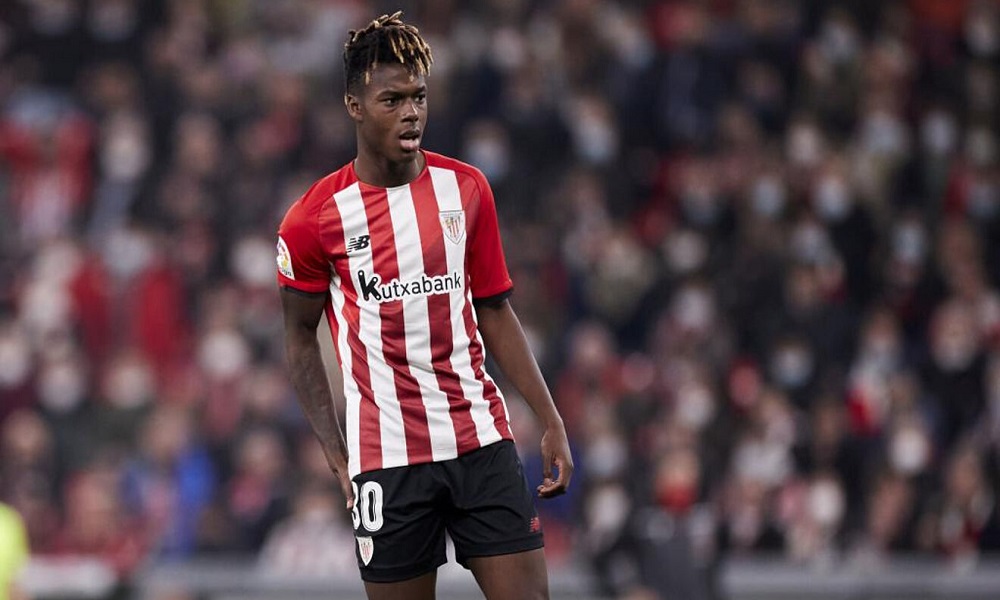
Somewhat unexpectedly, Iñaki Williams stands out for a quality many modern players lack: extraordinary durability. Between 2016 and 2023, the winger started 251 consecutive La Liga matches for Athletic Bilbao. Considering the intensity of the schedule, this feat is remarkable — and that’s not counting his appearances in other competitions.
Even more astonishing, he played for almost two years with a glass shard in his foot, only later feeling discomfort — yet he continued to score consistently for his club. Williams has become a true legend in Bilbao. His story off the pitch is equally remarkable: his parents fled Ghana through the Sahara Desert, faced border challenges, and eventually secured asylum in Spain, where Iñaki was born.
During his time at Athletic, he has played 479 matches, scoring 129 goals and providing 67 assists, while also winning three domestic trophies. Williams has a history of performing in decisive moments: in the 2021 Spanish Super Cup final against Barcelona, he scored and assisted in extra time to secure victory. Last season, he repeated a similar feat in the Spanish Cup quarter-finals, scoring and assisting his brother Nico to help Athletic reach the final, which they won against Mallorca.
Despite interest from larger clubs, Williams remains loyal to Athletic, demonstrating that dedication and consistency are as rare as talent in modern football.
Jan Sommer (Inter Milan)
Jan Sommer exemplifies a player who reached his peak relatively late. His early career unfolded outside Europe’s top clubs, playing in Switzerland and later at Borussia Mönchengladbach, which, while historically respected, is not considered a European powerhouse.
Now at Inter, Sommer’s ability to play with his feet is highly valued, but his goalkeeping skills remain elite. In his early years in Germany, his “Prevented Goals” statistics were modest, reflecting the team’s defensive challenges. Over time, however, he has improved significantly. By the 2018/19 season, his figure reached 11.39 — an impressive number for a club that concedes a considerable number of chances.
Sommer consistently ranks among league leaders in saves. Notably, in a 2022/23 Bundesliga match against Bayern Munich, he set a record by making 19 saves in a single game. Internationally, he was a key figure for Switzerland at Euro 2020, matching Jordan Pickford for the most saves and stopping a penalty from Kylian Mbappé in the round of 16, helping his team reach the quarter-finals.
At Inter, his reliability is a cornerstone of Simone Inzaghi’s success, contributing significantly to the club’s Serie A title and other victories. Sommer demonstrates that consistency, intelligence, and adaptability can make a goalkeeper truly underrated, even when they don’t always dominate headlines.
Álvaro Morata (Milan)
The Spanish striker is often unfairly associated with missing chances and underperforming for his teams. In reality, this perception does not reflect his true qualities.
Morata’s style is similar to Kai Havertz. Both often play in non-standard roles for their positions, dropping back to assist in ball distribution and creating space for teammates. This can reduce their personal statistics, but it greatly benefits the team by freeing attacking players for one-on-one situations. Morata also has the intelligence to find gaps between the lines and respond to passes on time.
Without the ball, he is disciplined and frequently surpasses many forwards in pressing actions, both in his own and the opponent’s half. His versatility and work ethic make him one of the most valuable players in his role. Many coaches emphasize not only his on-field contributions but also his leadership and behaviour. During Euro 2024, Luis de la Fuente even publicly defended him as captain after fans criticized his performance.
Throughout his career, questions about his consistency have appeared, but they have never been systematic. At Atlético, he has delivered strong results, sometimes exceeding his previous spells at Juventus or Chelsea. He has repeatedly proven himself in crucial moments, such as Juventus’ 2015 Champions League run, where he scored at every stage except the quarter-finals, including two decisive goals in the semi-final against Real Madrid, and during the 2016/17 season when he performed exceptionally despite not being a key starter.
It is also worth noting several other underrated players:
- Lucas Vázquez (Real Madrid) – scored many key goals and provided assists, retraining from winger to full-back, which is crucial during injury crises, such as when Dani Carvajal was out with a cruciate ligament injury.
- Pascal Groß – a master of passes and long-range shots, capable of playing across the attacking line. He moved to a top club (Borussia Dortmund) after 30, but at Brighton, he was second only to Kevin De Bruyne in chances created in the Premier League in recent years.
- Rafinha (Barcelona) – versatile player, showcasing multiple skills across midfield and attack.
- Henrikh Mkhitaryan – highly intelligent attacking midfielder with vision, technique, and work rate in defence.
- Vincenzo Grifo – creative midfielder in the top five leagues, excellent at set pieces and capable of producing key chances in the Bundesliga.


Other News